Tractor Assembly with Tree
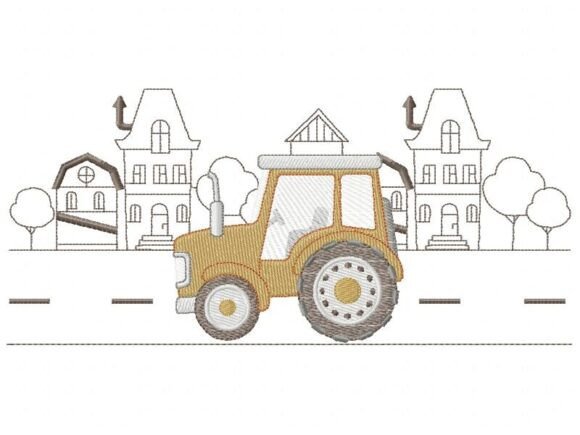
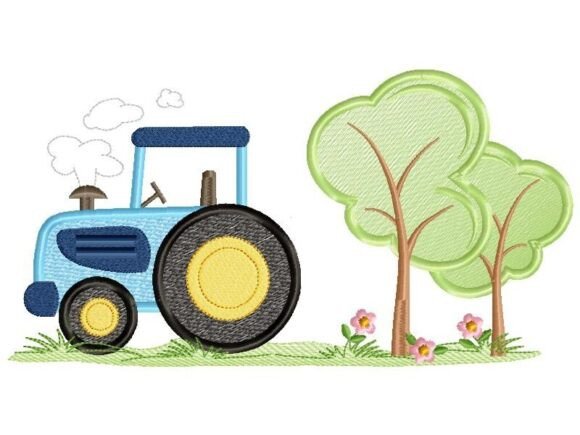
If you’ve ever stitched a whimsical farm scene onto a toddler’s overalls—or imagined how a cheerful tractor design might brighten a preschooler’s backpack—you already know the quiet magic of Tractor Assembly with Tree. This isn’t just another machine embroidery file. It’s a small, joyful storytelling tool: a friendly tractor, thoughtfully assembled with a leafy tree growing right out of its cab or hitch, rendered in clean, stitch-friendly lines that hold up beautifully on fabric.
It’s designed for real life—not just perfect studio conditions. Think of it as the kind of embroidery motif that works when your sewing room doubles as a playroom, when your “design time” happens between school drop-offs and dinner prep, or when you’re stitching gifts for nieces, students, or customers who actually wear what you make.
Where It Fits Naturally—Not Just Where It *Could* Fit
You’ll find Tractor Assembly with Tree landing where warmth and intention meet function. A homeschooling parent might stitch it onto a reusable lunch bag to spark conversation about seasons, farming, or machinery—turning daily routine into gentle learning. A children’s boutique owner uses it to personalize organic cotton rompers before listing them online; parents notice the detail in product photos and comment on how “sweetly unique” each piece feels. A summer camp coordinator embroiders it onto staff T-shirts—not as branding, but as a shared visual shorthand for their nature-and-play ethos.
It also shows up in quieter, more personal ways: a grandparent stitching it onto a quilt square for a new baby, choosing soft pastel thread so it reads as tender rather than toy-like; a middle-school art teacher printing the design onto iron-on transfer paper (after converting it properly) to demo embroidery basics without needing 20 machines running at once.
Why This Design Works When Others Don’t
Many tractor-themed embroidery files lean heavily into realism—detailed exhaust pipes, complex wheel treads, shading that demands high-density stitching. Tractor Assembly with Tree avoids that trap. Its charm comes from balance: enough mechanical detail to read clearly as a tractor, but simplified geometry that stitches cleanly on lightweight knits, fleece, and even some woven cottons. The tree isn’t an afterthought—it’s integrated. Its trunk flows from the chassis; branches curve around the cab like they belong there. That integration means fewer jump stitches, less thread breakage, and a stronger visual anchor on the fabric.
And because it ships in multiple formats (.pes, .jef, .dst, .exp, .vp3), it doesn’t force you to choose between your Brother machine and your friend’s Janome—or lock you out if you switch machines later. You’re not buying a single-use file. You’re getting flexibility baked in.
Real Scenarios, Real Trade-Offs
Let’s be practical: this design shines brightest at its native size. If you’re planning to stitch it on a onesie pocket, great—it’s sized perfectly for that. But if you try shrinking it to fit a hair clip or blowing it up to cover a tote bag panel, the outcome becomes unpredictable. Stitch density changes. Fill areas may not stabilize well on stretchy fabrics. Fine details—like the curve of the tree’s smallest branch—can vanish or turn jagged. That’s not a flaw in the file; it’s how embroidery physics works. So before downloading or purchasing, ask yourself: What am I stitching it on, and at what scale? If your answer involves heavy resizing, consider whether a vector-based appliqué version—or pairing this with simple satin-stitch borders—might serve you better.
Who Benefits—and How They Actually Use It
- Hobbyists with kids: They use it to add personality to hand-me-down jeans—replacing worn-out patches with something cheerful and cohesive. One mom told us she stitched it over a knee hole on her son’s favorite pants, then added tiny embroidered ladybugs nearby. It wasn’t “perfect,” but it was *his*, and he wore them proudly all summer.
- Small-batch makers: They layer it with other seasonal motifs—sunflowers in June, pumpkins in October—creating mini collections for Etsy. Because the design is clean and scalable (within reason), it pairs easily with fonts and frames without competing visually.
- Educators and therapists: Some early childhood specialists use it in sensory bins—stitching the design onto textured fabric squares (corduroy, burlap, denim) for tactile sorting activities. The familiar shape helps kids focus while building fine motor skills.
- Freelance designers: They import the .svg version (if included) into digitizing software to tweak underlay or adjust pull compensation for specific fabrics—then resave for their own machine library. It becomes a reliable starting point, not just a finished asset.
What to Check Before You Stitch
Before loading Tractor Assembly with Tree into your hoop, take two minutes to check three things:
- Fabric stability: Light knits and jersey need tear-away or cut-away stabilizer underneath—not just iron-on. The tree’s curves can ripple if the base shifts mid-stitch.
- Thread choice: Cotton or poly-cotton embroidery thread works best here. Metallic or rayon may highlight minor tension inconsistencies more than you’d like—especially on the tractor’s rounded fenders.
- Hoop placement: Because the tree extends beyond the tractor’s outline, centering matters. Mark your fabric lightly with water-soluble pen first, especially if stitching near seams or curved edges (like a sleeve cuff).
None of these are dealbreakers—they’re just the small, concrete things experienced stitchers do automatically. And if you’re newer to machine embroidery, that’s okay too. Start with a scrap of quilting cotton and medium-weight stabilizer. Run a test. See how the branches lay down. Adjust tension if needed. Let the design teach you something about your machine—and your process—before committing to the final piece.
In the end, Tractor Assembly with Tree endures because it meets people where they are: not in a flawless creative vacuum, but in kitchens with flour still on the counter, studios shared with pets, classrooms buzzing with energy, and small shops where every stitched detail carries meaning. It’s friendly without being childish, playful without sacrificing craft, and simple enough to finish in one sitting—but thoughtful enough to feel like it was made for *this* moment, *this* person, *this* piece of fabric.