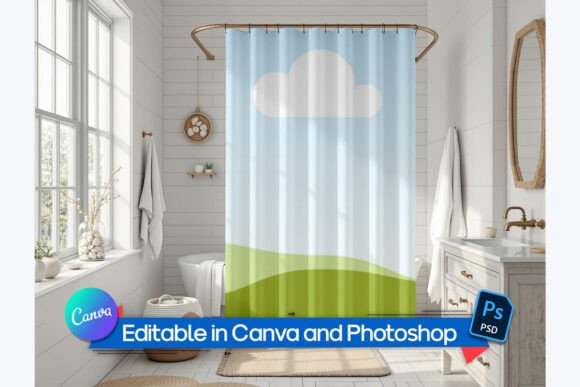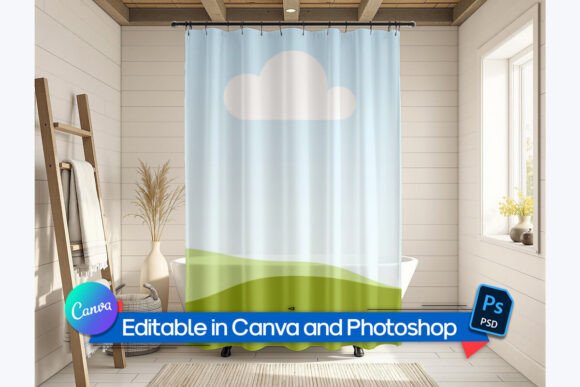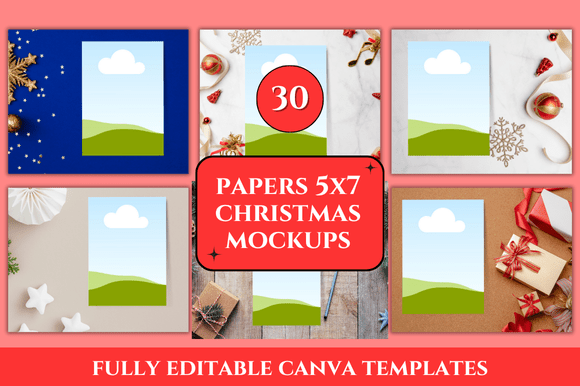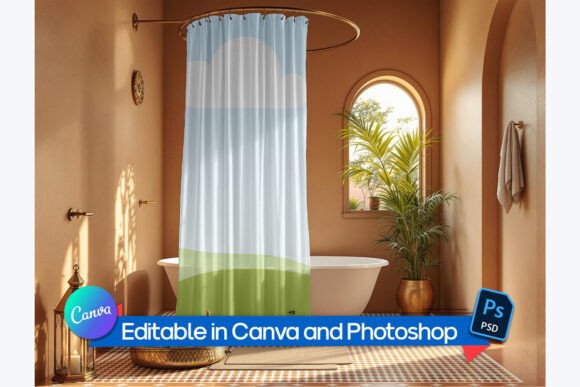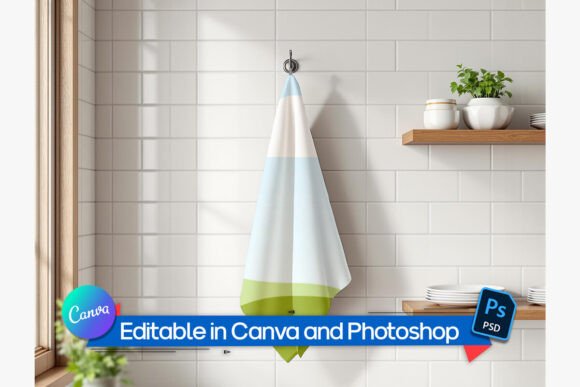
Tea Towel Mockup
A Tea Towel Mockup is a digital template designed to display textile designs—such as patterns, logos, or typography—on a realistic, styled image of a tea towel. Unlike generic flat previews, it places your design within a context: draped over a rustic countertop, folded beside ceramic mugs, or hung on a vintage hook. This visual representation helps designers, brands, and small businesses communicate how their artwork translates onto physical fabric before production.
These mockups are typically delivered as layered PSD files with Smart Objects, enabling non-destructive editing in Adobe Photoshop or free alternatives like Photopea. Many also include Canva-compatible versions for users who prefer drag-and-drop workflows without installing desktop software.
Why Consider a Tea Towel Mockup?
Designers and product creators often need to present work to clients, stakeholders, or online audiences in a way that conveys scale, texture, and real-world use. A flat JPEG of a pattern doesn’t reveal how it drapes, how colors interact with natural light, or how it complements common kitchen or bathroom environments. A Tea Towel Mockup bridges that gap by offering photorealistic context without requiring photography skills, studio space, or model releases.
It’s especially relevant for those developing print-on-demand products, launching home goods lines, or building cohesive brand assets for lifestyle or wellness markets. Because tea towels are frequently used in branding—think café merchandise, artisanal food packaging, or boutique hotel amenities—the mockup supports both functional and aesthetic evaluation.
Key Benefits and Realistic Expectations
Time efficiency: Inserting a design into a Smart Object layer takes seconds. There’s no need to manually match perspective, lighting, or fabric folds—those are already baked into the scene.
Consistency across presentations: Using the same mockup for multiple designs ensures uniform lighting, background, and styling. This matters when building a catalog or social media feed where visual cohesion strengthens brand recognition.
Cost-effectiveness: Compared to hiring a photographer or renting a studio, a one-time mockup purchase offers scalable reuse. It eliminates recurring production costs for early-stage concept testing or pitch decks.
However, expectations should be grounded. A Tea Towel Mockup does not replace physical sampling. It cannot show exact fabric drape behavior across different weaves (e.g., linen vs. cotton), nor does it replicate tactile feedback like absorbency or stiffness. Color accuracy depends on monitor calibration and output settings—what appears vibrant on screen may shift slightly in print. Also, while high-resolution files support web and presentation use, large-format print (e.g., billboards) may require additional retouching or resolution checks.
When a Tea Towel Mockup Is a Strong Fit
This tool works best when your goal is visual communication, not engineering validation. It suits scenarios such as:
- Creating portfolio pieces or case studies for textile or surface pattern designers;
- Preparing product listings for Etsy, Shopify, or Amazon Handmade;
- Developing mood boards or brand guidelines that include home goods;
- Testing color palettes or layout variations before committing to print runs;
- Generating consistent social media visuals for a launch campaign or seasonal collection.
In these cases, the mockup serves as a bridge between abstract design and tangible perception—helping viewers imagine ownership and integration into daily life.
When Alternatives May Be More Appropriate
A Tea Towel Mockup isn’t always the optimal choice. Consider other options if:
- You’re evaluating fabric performance (e.g., shrinkage, bleed-through, or durability). Physical prototypes remain essential for functional testing.
- Your audience expects highly customized scenes—such as branded kitchen sets or specific interior styles not included in the mockup pack. Custom photography or 3D rendering may offer greater control.
- You need multiple angles (e.g., front, side, overhead) or dynamic poses (e.g., towel mid-drape or in motion). Most standard mockups provide one fixed composition per file.
- Your workflow relies heavily on vector-based tools like Illustrator or Figma, and you lack access to Photoshop or Canva. While some mockups offer PNG overlays, full editability usually requires raster-editing compatibility.
Also, note licensing restrictions: most commercial mockups prohibit redistribution, resale, or use as free resources. Always verify usage rights before incorporating into client deliverables or templates intended for third-party use.
Making an Informed Choice
Before selecting a Tea Towel Mockup, ask yourself three questions:
- What’s the primary purpose? If it’s client presentations or e-commerce visuals, a well-lit, versatile mockup with neutral styling usually delivers strong returns. If it’s technical validation, prioritize physical samples first.
- What’s your editing comfort level? If you regularly use Photoshop or Photopea, Smart Object-based files maximize flexibility. If you rely on browser-based tools, confirm Canva compatibility and check whether layers remain editable after import.
- How much scene variety do you need? Some packs include five or more settings (e.g., marble counter, wooden shelf, hanging rod). Others offer only one angle. Assess whether diversity supports your content strategy—or if consistency across fewer scenes better serves your goals.
Also consider file quality: look for 4000px+ width, sRGB color profile, and layered organization. Poorly structured PSDs—where shadows or textures are flattened—limit customization and reduce realism.
Finally, remember that mockups are aids—not substitutes—for thoughtful design decisions. They amplify clarity but don’t compensate for weak composition, mismatched color contrast, or unclear branding intent. Use them to test assumptions, refine messaging, and align stakeholder expectations—not to bypass foundational design work.
For textile designers, small-batch makers, or marketing teams supporting home goods brands, a Tea Towel Mockup remains a practical, accessible tool. Its value lies not in replacing real-world feedback, but in making early-stage decisions more informed, visual, and efficient.