Moroccan Style & Elegant Shower Curtain Mockups: A Creative Designer’s Essential Tool
Whether you're launching a boutique textile brand, curating a print-on-demand collection, or building a lifestyle-focused Instagram feed, how your designs appear in context matters — deeply. That’s where Moroccan style shower curtain mockups and elegant shower curtain mockups step in: not just as visual placeholders, but as strategic storytelling tools that bridge imagination and realism. These high-fidelity digital assets transform flat patterns into immersive, emotionally resonant scenes — all without stepping foot in a photo studio.
What Exactly Is a Shower Curtain Mockup?
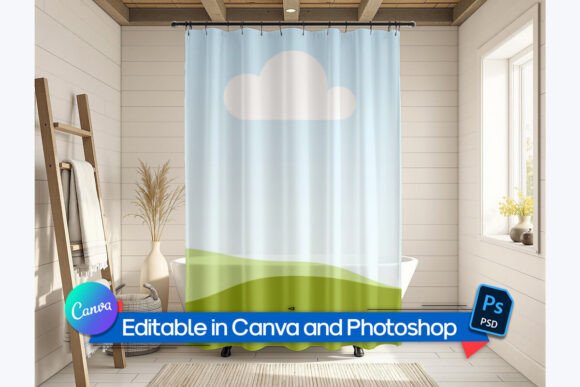
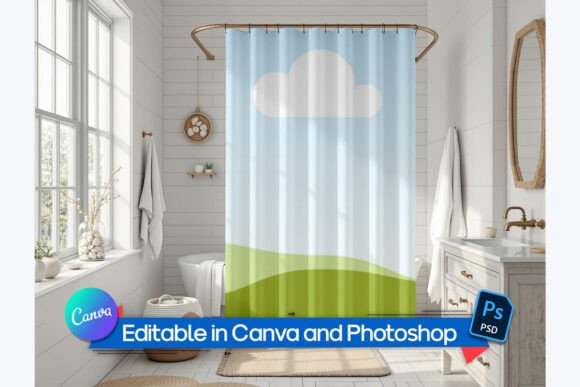
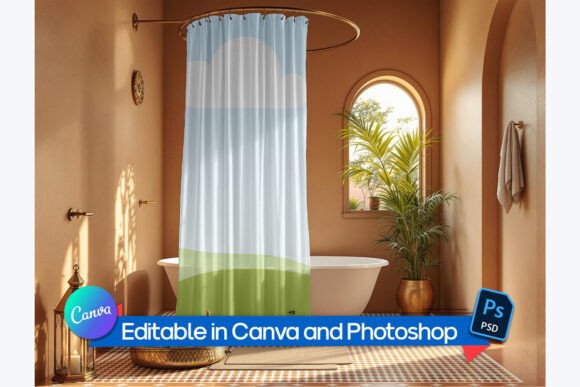
A shower curtain mockup is a professionally photographed or 3D-rendered image of a bathroom setting, with a smartly layered digital “frame” (often called a Smart Object) where your custom design can be seamlessly inserted. Unlike generic stock photos or low-res templates, premium mockups like the Elegant Shower Curtain Mockup are crafted with real-world lighting, natural fabric drape, subtle shadows, and authentic textures — making your textile design look as if it’s already hanging in a serene, thoughtfully styled space.
Think of it like dressing a mannequin for fashion week — except instead of fabric, you’re showcasing surface patterns, color palettes, or cultural motifs. The Moroccan style variant, for instance, often features warm terracotta tones, intricate geometric zellige-inspired borders, and soft ambient light reminiscent of riad bathrooms in Marrakech. The elegant version leans into minimalist luxury: clean lines, neutral backdrops, marble accents, and gentle folds that emphasize texture and craftsmanship.
Why Designers & Brands Rely on These Mockups
In today’s visually saturated digital marketplace, first impressions happen in under three seconds. A product image that feels staged, artificial, or disconnected from real life risks losing trust — and clicks. That’s why savvy creators choose mockups grounded in realism, context, and brand alignment.
- Speed & Efficiency: No need to hire photographers, source props, or wait for ideal lighting. Insert your pattern into the Smart Object layer in Photoshop or drag-and-drop in Canva — and generate polished visuals in minutes.
- Consistency Across Platforms: Whether you’re updating your Etsy shop, designing a Lookbook PDF, or posting to Pinterest, using the same mockup family ensures cohesive aesthetics across all touchpoints.
- Emotional Resonance: A Moroccan-style mockup doesn’t just show a curtain — it evokes travel, heritage, artisanal warmth. An elegant mockup whispers sophistication, calm, and intentionality. That emotional subtext strengthens brand recall.
- SEO & Social Optimization: High-resolution, keyword-rich visuals perform better in Google Images and Pinterest search. Descriptive filenames (e.g., moroccan-geometric-shower-curtain-mockup-psd) and alt text boost discoverability.
How It Works: From Concept to Click-Worthy Visual
The process is intentionally simple — yet powerful:
- Download the layered PSD file (compatible with Photopea, a free browser-based alternative to Photoshop) or the Canva template.
- Double-click the Smart Object layer — your design automatically replaces the placeholder with perfect perspective, lighting, and fabric behavior.
- Adjust colors, contrast, or scale non-destructively within the layers — no flattening, no guesswork.
- Export in web-ready formats (JPG/PNG) or print-ready resolution (300 DPI) for catalogs, pitch decks, or packaging previews.
This workflow isn’t just convenient — it’s inclusive. You don’t need advanced design training to use these files. Beginners benefit from intuitive structure; professionals appreciate the flexibility to fine-tune highlights, add vignettes, or composite multiple mockups into a mood board.
Common Misconceptions — Clarified
Myth: “Mockups are just fancy filters.”
Truth: They’re precision-engineered composites built from real photography or photorealistic 3D renders — complete with physics-based fabric simulation, depth-aware shadows, and chromatic consistency.
Myth: “One mockup fits all designs.”
Truth: Context shapes perception. A bold Berber motif shines in a Moroccan-themed scene — but may feel visually overwhelming against an ultra-minimalist elegant backdrop. Matching your design’s cultural tone, scale, and energy to the mockup’s environment is key.
Myth: “Using mockups means my work isn’t ‘real’ enough.”
Truth: Professional designers, from textile studios in Lyon to indie makers on Redbubble, use mockups at every stage — ideation, client presentation, crowdfunding campaigns, and even manufacturing briefs. It’s not about faking authenticity — it’s about communicating vision with clarity.
Real-World Applications Beyond E-Commerce
While online stores are the most obvious use case, these mockups serve broader creative and business functions:
- Brand Development: Test how your signature palette reads in a full-room context before committing to physical samples.
- Client Presentations: Show interior designers or boutique buyers exactly how your fabric will elevate their space — no prototypes required.
- Educational Content: Design instructors use them to teach pattern scaling, color theory in situ, and cultural motif application.
- Social Proof & UGC Prep: Share “lifestyle mockups” alongside customer testimonials — “See how Sarah styled our Amazigh print in her coastal bathroom.”
- Licensing & Collaboration: Pitch collections to home goods brands with realistic, on-brand visuals — increasing approval rates and negotiation leverage.
Choosing the Right Mockup for Your Goals
Ask yourself:
- Who is my audience? Design-savvy millennials may respond to boho-Moroccan warmth; luxury retailers prefer refined elegance.
- What story am I telling? Heritage? Modernity? Sustainability? Texture? Each narrative pairs best with a specific aesthetic language.
- Where will this live? Instagram carousels favor vertical, detail-rich mockups; Amazon listings need crisp, centered front views; print catalogs benefit from multi-angle variants.
And remember: customization is part of the value. If your Moroccan collection includes hand-painted florals rather than strict geometry, or your elegant line features soft watercolor gradients, many creators offer tailored mockup adjustments — ensuring your unique voice stays center stage.
Final Thought: Design With Purpose, Present With Confidence
A shower curtain is more than functional — it’s a canvas. And a mockup is more than a template — it’s a bridge between your creative labor and the world’s perception of it. Whether you’re drawing inspiration from the medinas of Fez or the quiet symmetry of Scandinavian baths, the right mockup honors your intent, elevates your craft, and invites viewers not just to see your design — but to imagine living with it.
So before you finalize that next launch, ask: Does this visual reflect the feeling I want people to carry into their homes? With Moroccan style and elegant shower curtain mockups, the answer doesn’t have to be hypothetical — it can be beautifully, authentically, real.