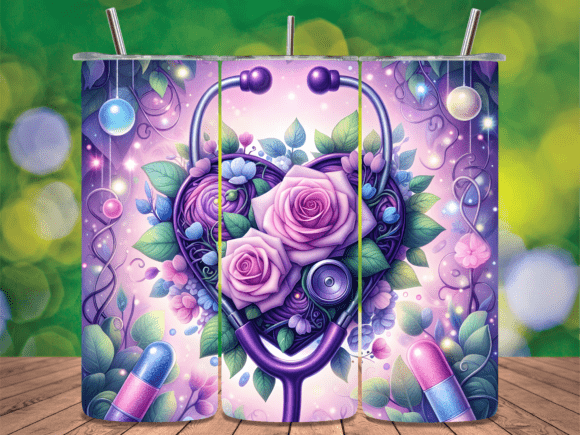
Heart-shaped Roses Stethoscope Tumbler
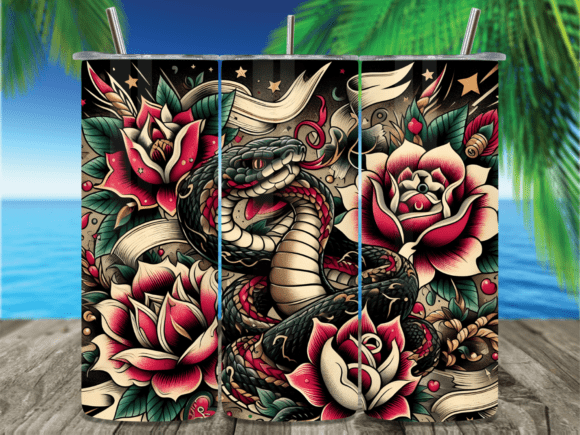
If you're designing custom drinkware for healthcare professionals, nursing students, or medical-themed gifts, the Heart-shaped Roses Stethoscope Tumbler wrap offers a thoughtful blend of symbolism and style—roses representing care, the stethoscope signifying profession, and the heart shape adding warmth and empathy. This isn’t just another floral tumbler design; it’s a purpose-built, high-resolution sublimation file optimized specifically for 20oz straight and tapered tumblers. But before you click “purchase” and assume it’ll work flawlessly on your next batch of merchandise, there are practical details many overlook—and those oversights can cost time, materials, and customer trust.
Common Missteps—and Why They Matter
Mistake #1: Assuming “20oz” means one universal size. Not all 20oz tumblers share the same dimensions—or curvature. A straight-wall tumbler (like many Yeti Rambler or generic stainless steel styles) holds the same diameter from base to rim, while tapered versions narrow toward the top. That subtle difference changes how a wrap aligns, especially near the lip or base. If you download only the straight version and apply it to a tapered tumbler, the roses may stretch unnaturally, the stethoscope could distort, or the heart outline might warp at the top edge. The listing wisely includes both a straight and tapered PNG—but only if you know to check that detail before downloading.
Mistake #2: Overlooking resolution requirements for sublimation. At 2790×2460 pixels and 300 dpi, this file meets industry standards for crisp, bleed-free transfers—but only if used at its intended scale. Resizing the PNG in basic photo editors (like free online tools or older versions of Paint) often introduces pixelation or interpolation blur. Worse, some users try to “stretch” the image to fit a slightly taller tumbler, unknowingly degrading line clarity—especially critical for fine details like rose petals or stethoscope tubing. The result? A faded, muddy print where delicate elements vanish entirely.
Mistake #3: Confusing digital use rights with physical product rights. This listing grants commercial permission to print the design onto physical items—tumblers, mugs, tote bags, even lab coats—but not to resell or redistribute the PNG itself. That distinction trips up creators who later list the file as their own “digital bundle” on Etsy or Creative Market. It’s not just against policy—it risks takedowns, account suspensions, and damaged credibility. You’re licensed to make and sell products featuring the Heart-shaped Roses Stethoscope Tumbler design—not the file as a standalone asset.
What to Verify Before You Download or Apply
Before finalizing your order—or worse, pressing “print”—take two minutes to confirm these points:
- Your tumbler model. Measure height and top/bottom diameters. Compare them to standard specs: most straight 20oz tumblers are ~8.5–9 inches tall with a consistent ~3-inch diameter; tapered versions often measure ~9.3 inches tall with a 3.25-inch base tapering to ~2.75 inches at the rim. The included dimensions (9.3×8.2 inches) match common tapered profiles—so if yours is straight, use the alternate file.
- Your printer’s color profile and paper type. Sublimation ink behaves differently on coated vs. uncoated transfer paper. Run a test print on scrap paper first—not just to check alignment, but to verify contrast. Roses should retain soft gradients; black stethoscope lines must stay sharp, not gray or fuzzy.
- Your workflow compatibility. This is a PNG—not a layered PSD or vector AI file. If you need to recolor individual elements (e.g., changing rose red to lavender for a gender-neutral palette), basic PNG editors won’t let you isolate layers. Plan edits before printing, or pair this file with compatible software like Affinity Photo or Photoshop that supports non-destructive adjustments.
Better Approaches for Reliable Results
Instead of treating this as a “plug-and-play” asset, treat it as a precision tool—one that rewards attention to context. For example: if you run a small shop selling nurse appreciation gifts, consider pairing the Heart-shaped Roses Stethoscope Tumbler wrap with coordinating stickers (same rose motif, simplified for vinyl cutting) or printable thank-you cards. That consistency builds brand recognition without extra design work.
Another smart habit: save both PNG files in clearly labeled folders—“Tapered_HeartRoses_Stethoscope” and “Straight_HeartRoses_Stethoscope”—and add a quick note about which tumbler brands each fits best (e.g., “Tapered = Contigo Autoseal West Loop; Straight = Simple Modern 20oz”). It takes 30 seconds now and saves 20 minutes of troubleshooting later.
And if you’re sourcing tumblers in bulk, ask suppliers for dimensional specs *before* ordering—not after. Some manufacturers list “20oz” but vary by ±0.2 inches in height or curve radius. That tiny variance is enough to shift where the heart shape lands relative to the tumbler’s handle or base seam. When in doubt, request a sample tumbler first, apply a test wrap, and photograph the result under natural light. What looks aligned on screen may show slight misalignment in person—especially around curved surfaces.
A Final Note on Value and Intent
This Heart-shaped Roses Stethoscope Tumbler design works because it balances meaning and mechanics: the imagery resonates emotionally, while the technical specs support real-world production. Its value isn’t in novelty alone—it’s in reliability. That’s why checking file dimensions, honoring usage terms, and matching format to function matters more than chasing the “cutest” or “trendiest” medical-themed wrap.
Whether you’re a solo crafter prepping for a hospital gift fair, an educator creating student appreciation swag, or a small business owner expanding into wellness-themed merchandise—this file delivers when treated with informed intention. Download it knowing exactly which tumbler it fits, how your printer interprets it, and where your responsibility begins and ends. Then, apply it with confidence—not just because it looks beautiful, but because you’ve already accounted for what makes it work.