Elegant Flower
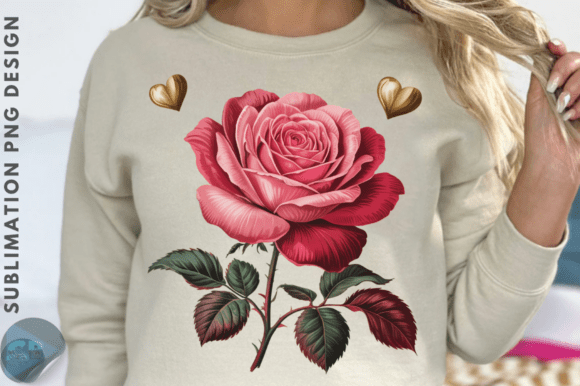
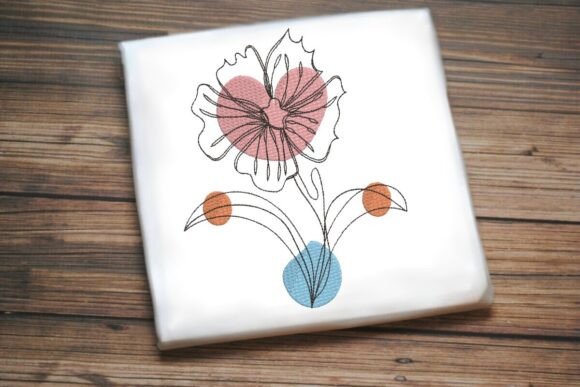
There’s something timeless about a rose—not just as a symbol of love or celebration, but as a visual motif that carries weight, grace, and quiet confidence. The Elegant Flower embroidery design distills that essence into a single, refined motif: a blooming rose rendered in vibrant yet sophisticated color palettes, outlined with clean, intentional precision. It’s not merely decorative—it’s expressive, adaptable, and thoughtfully engineered for real-world use.
A Modern Rose, Stitched with Intention
What sets Elegant Flower apart isn’t just its floral subject—it’s the way it’s constructed. Unlike densely filled traditional rose motifs, this design uses a one-line contour style. Imagine tracing the silhouette of a rose with a single, unbroken stroke—petals unfurling, stem curving, leaves emerging—all captured in one fluid line. This approach delivers immediate visual impact while preserving breathing room on fabric. It feels contemporary without sacrificing charm, minimal without feeling sparse.
The color scheme reinforces this balance. Rich burgundies, soft blush pinks, deep forest greens, and creamy ivories are layered with subtle tonal shifts—not garish, not muted, but *alive*. These hues translate beautifully across fabric types, from cotton tees to linen totes, and hold up well under both natural and indoor lighting.
Designed for Real Machines—and Real People
Elegant Flower isn’t locked behind proprietary software or niche hardware. It arrives in multiple industry-standard file formats—including PES, DST, EXP, JEF, VP3, and XXX—so whether you’re using a Brother SE600, an industrial Tajima, or a Janome Memory Craft, compatibility is built in. No conversion headaches. No guesswork.
That said, practicality matters more than format count. Each version is digitally optimized: stitch density calibrated for stability on lightweight knits and medium-weight wovens alike; jump stitches minimized to reduce thread trimming; underlay strategically placed to prevent puckering on stretchy fabrics. In short: it’s tested—not just exported.
Where This Design Finds Its Footing
- Apparel personalization: A single Elegant Flower centered on the chest of a black crewneck tee adds instant sophistication. On a white linen shirt cuff? It becomes a quiet signature.
- Reusable accessories: Tote bags, aprons, and market totes gain character—and longevity—when stitched with this design. The contour line ensures clarity even after repeated washing and folding.
- Home textiles: Pillowcases, tea towels, and napkin hems benefit from its scale and restraint. It enhances rather than overwhelms.
- Small-batch branding: Boutique owners, crafters, and Etsy sellers use Elegant Flower to unify product lines—think matching packaging tags, embroidered labels, or custom gift wrap accents.
Who Benefits Most—and Why
This isn’t a “one-size-fits-all” pattern, nor is it meant to be. Its greatest value emerges when matched with specific needs and workflows:
- Beginners seeking confidence: Because it’s a single-outline design with moderate stitch count (typically under 4,500 stitches), it’s forgiving on tension adjustments and less prone to thread breaks. A great first project for those moving beyond basic lettering.
- Professionals managing volume: The clean digitization means faster hooping, consistent results across dozens of garments, and fewer restarts due to misalignment or skipped stitches.
- Creatives valuing versatility: You can easily resize Elegant Flower between 3.5" and 5.5" without losing definition—ideal for scaling across product categories (e.g., small on a handkerchief, larger on a tote).
- Business owners building brand cohesion: Its distinctive contour style functions like a visual anchor—recognizable at a glance, adaptable across mediums, and distinct enough to avoid blending into generic floral libraries.
Real-World Use Cases That Reveal Its Strengths
Consider a local florist launching a seasonal workshop series. They embroider Elegant Flower onto canvas aprons for staff and attendees—using the same design file across three fabric types (cotton drill, poly-cotton blend, and lightweight denim). Because the underlay and stitch angles were pre-optimized, they achieve consistent coverage without re-hooping or re-testing on each material.
Or take a freelance textile designer creating limited-run scarves. She layers Elegant Flower subtly along one selvedge edge—rotated and mirrored—then pairs it with hand-drawn botanical line art. The machine-stitched rose grounds the composition, adding tactile contrast without competing visually.
Even educators find utility: high school fashion classes use Elegant Flower to teach digitizing principles—how line weight affects perception, how color placement guides eye movement, and why stitch order matters for fabric behavior.
Thoughtful Considerations Before You Begin
While Elegant Flower excels in many contexts, thoughtful application yields the best outcomes:
- Fabric matters more than file format: Highly textured or loosely woven fabrics (like burlap or open-weave lace) may require stabilizer testing—even with optimized files. A light cutaway or tear-away works best for most applications.
- Color choice is contextual: The provided palettes are curated, not prescriptive. A navy rose on charcoal fabric reads differently than the same rose on ivory. Always test on scrap fabric under your intended lighting conditions.
- It’s not a filler motif: Due to its intentional simplicity, Elegant Flower shines strongest as a focal point—not as part of a dense all-over repeat. Overcrowding diminishes its elegance.
- Resizing has limits: While scalable, pushing below 2.75" risks losing petal nuance; exceeding 6" may require re-digitizing for optimal stitch density. Most users find sweet-spot sizing between 4"–5".
How to Evaluate If Elegant Flower Fits Your Project
Ask yourself these questions before downloading or stitching:
- Does my project benefit from a motif that communicates refinement—not busyness?
- Am I working with fabrics where clean lines and moderate stitch density will perform reliably?
- Do I need a design that transitions smoothly between apparel, accessories, and home goods—without redesigning each time?
- Is visual recognition important? (e.g., for branding, teaching, or signature style)
- Do I value time-saving digitization—like reduced thread trims and stable hooping—over ultra-dense fill effects?
If three or more answers are “yes,” Elegant Flower is likely a strong match—not because it’s flashy, but because it’s resolved. Every curve, every color stop, every stitch path serves a purpose grounded in experience, not assumption.
More Than a Pattern—A Design Language
In a landscape crowded with ornate, over-digitized florals, Elegant Flower offers something quieter but no less powerful: clarity. It reminds us that elegance isn’t about excess—it’s about intention, restraint, and resonance. Whether you’re stitching your first garment or launching your tenth product line, it doesn’t shout for attention. It earns it—stitch by deliberate stitch.
And that, perhaps, is the most useful thing any embroidery design can do.