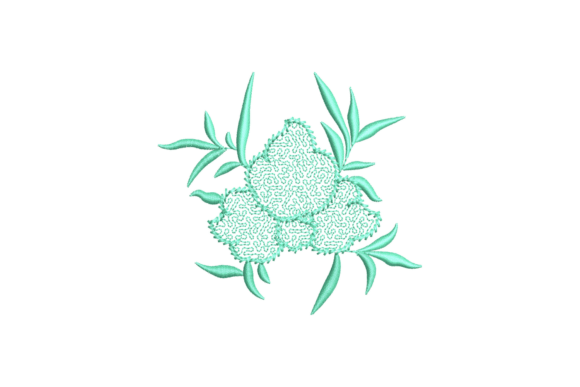
Botanical Plants Embroidery Design
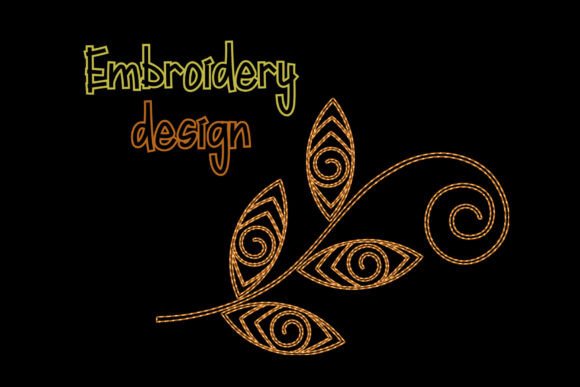
There’s a quiet confidence in botanical motifs — not loud, not fleeting, but rooted in clarity and calm. The Botanical Plants embroidery design captures that essence: delicate, hand-drawn-style leaves and stems rendered with precision and lightness. It’s not just another floral pattern. It’s a versatile, eco-conscious visual tool — clean enough for modern minimalism, expressive enough for handmade warmth, and structured enough to scale across surfaces without losing its integrity.
What Makes This Design Stand Out
Unlike mass-produced clipart or overly stylized vector graphics, Botanical Plants was crafted with intention. Each leaf flows naturally; stems curve with subtle asymmetry; negative space is respected, not filled. That attention translates directly into stitch quality — clean thread paths, balanced density, and smooth transitions between elements. Because it’s designed for machine embroidery (not adapted from digital art), it avoids common pitfalls like thread breaks, puckering, or excessive underlay.
The design ships in multiple industry-standard formats (.dst, .pes, .jef, .vp3, .exp, .xxx), so whether you’re using a Brother, Janome, Bernina, or Husqvarna Viking machine, compatibility isn’t a barrier — it’s built in. No conversion headaches. No guesswork. Just ready-to-stitch clarity.
Creative Uses That Go Beyond the Expected
Most people start with tote bags or pillowcases — and for good reason. A single stem stitched along the hem of a linen tote adds quiet sophistication. But the real value of Botanical Plants emerges when you shift context:
- Apparel with purpose: Stitch it onto the chest pocket of organic cotton work shirts for small-batch sustainable brands — not as decoration, but as a quiet signature of values.
- Educational tools: Teachers embroider simplified versions onto fabric flashcards for plant biology units. The tactile quality reinforces learning — especially for kinesthetic learners.
- Small business packaging: Embroider a tiny stem on the corner of reusable gift wraps or muslin produce bags. It signals care without words — ideal for farmers’ markets or zero-waste shops.
- Wall decor with depth: Use varying thread weights (e.g., 40-weight cotton for stems, 60-weight for fine veins) on heavyweight linen to create subtle texture — no framing needed, just pinned or stretched.
It works equally well scaled down to 2.5 inches for cuff details or enlarged to 8 inches as a focal point on a wall hanging. Because the line work is consistent and uncluttered, resizing maintains legibility — a practical advantage many botanical designs lack.
Adapting for Different Audiences and Goals
Your goals shape how you use Botanical Plants — and that’s where flexibility matters most.
Hobbyists appreciate its beginner-friendly structure: low stitch count, minimal color changes, and forgiving placement. Try it on tea towels first — a forgiving fabric that shows off texture without demanding perfection.
Small business owners use it to unify product lines. Imagine matching aprons, oven mitts, and recipe cards — all anchored by the same stem motif, but varied in placement and scale. Consistency builds recognition; subtlety keeps it from feeling branded or corporate.
Educators and makerspaces often layer it with other techniques. Combine it with natural dyeing — stitch first, then dip-dye the fabric. The embroidery resists some absorption, creating soft halos around each leaf. Or pair it with hand-stitched veins added post-machine for hybrid pieces that feel both precise and personal.
Freelance designers integrate it into larger compositions: trace the stem digitally, then extend it into custom illustrations for client branding — maintaining the original’s rhythm while adapting it to logos, patterns, or web assets.
Keeping Results Clear, Consistent, and Audience-Friendly
Clarity starts before you press “start.” Test stitch on a scrap of your final fabric — especially if it’s textured (like burlap or terry cloth) or stretchy (like jersey). Adjust stabilizer choice accordingly: tear-away for stable wovens, cut-away for knits, and wash-away for sheer fabrics like organza.
For consistency across multiple items, mark placement with a water-soluble pen and use a hoop with alignment markings. Even small shifts in positioning change how the design reads — a stem centered on a pillowcase feels grounded; one placed near the corner feels intentional and dynamic.
To keep results original, avoid overusing the full design. Instead, isolate one leaf or a short stem segment. Rotate it, mirror it, or repeat it in a staggered grid. That approach turns a single file into dozens of unique layouts — no extra design work required.
Why This Fits Real Creative Workflows
This isn’t about adding “more” to your process — it’s about working smarter within constraints. Time-pressed educators need fast, reliable files. Small studios need designs that print well *and* stitch well. Eco-conscious makers need visuals that reflect their material choices — no plastic-looking gloss, no synthetic exaggeration.
Botanical Plants meets those needs because it was made for application, not just aesthetics. Its clean outlines translate cleanly to screen printing or heat transfer vinyl. Its open composition leaves room for text — perfect for pairing with handwritten quotes on wall hangings or brand names on apparel labels.
And because it avoids trend-driven details (no neon gradients, no exaggerated curves), it stays useful across seasons and projects. You won’t outgrow it. You’ll reinterpret it — on a child’s backpack this spring, a conference badge holder next fall, a set of napkins for holiday gifting.
Getting Started Thoughtfully
Begin with one surface you already understand — your favorite tote, a pillowcase you’ve stitched before, or a simple apron pattern. Use the medium size first (4–5 inches), center-placed, with matte cotton thread. Notice how the leaves interact with fabric grain. Then experiment: shift it to the edge, reduce contrast by using tonal thread, or combine two stems at different angles.
Keep notes — not just of settings, but of how the piece felt to make and how others responded. Did people pause to touch the stitching? Did it spark conversation about plants, sustainability, or craft? Those reactions are data — real feedback that informs your next use.
That’s the strength of Botanical Plants: it supports intention, not just decoration. Whether you’re building a brand, teaching a skill, or making something meaningful for your home, it offers a quiet, capable foundation — rooted, adaptable, and ready to grow with you.